
Use of RSI for better commercial decisions in cryptocurrencies
The world of cryptocurrency trade can be unpredictable and volatile. With the increase of several cryptocurrencies, merchants constantly seek ways of navigating these markets with confidence. An effective tool to make better commercial decisions is the relative force index (RSI), an indicator of technical analysis that operators have used widely throughout the world.
What is RSI?
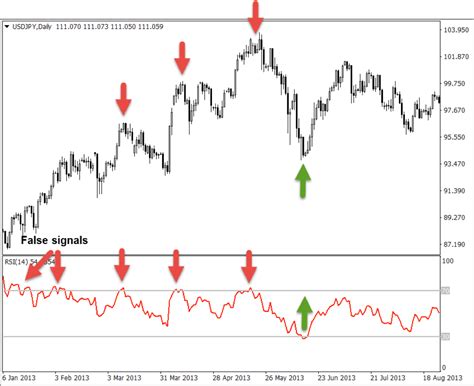
The Relative Force Index (RSI) is an indicator based on the time developed by J. Welles Wilder in 1978. It measures the magnitude of recent price changes to determine overcompra and overene conditions, helping merchants identify possible purchase and sale opportunities. RSI varies from 0 to 100, with higher values that indicate lower overload conditions and lower values that indicate overall conditions.
How to use RSI in cryptocurrency trade
To use RSI effectively in the cryptocurrency trade, consider the following steps:
1.
Choose your cryptocurrency
Select a cryptocurrency with which you are familiar or have great interest. This will help you focus on your price movements and make more informed decisions.
2.
Set your parameters
Determine its desired RSI range (for example, 70-80) according to its commercial strategy. It is also possible that you want to establish alerts for overall and overcompra conditions, which are generally indicated by values below 20 and more than 80, respectively.
3.
Calculate the RSI
Use a RSI calculator or create your own formula to calculate the RSI for each negotiation day. The standard calculation implies:
RSI = (100 – True Average Rank) / True Range Average
Where:
– The true average range is the average value of the high price difference in a price period for an established period.
4.
Interpret the Crossover RSI
The crossing between purchase and sale signals can be an effective commercial strategy. A purchase signal occurs when the RSI crosses the mobile average of 30 periods, while a sales signal occurs when it crosses below the mobile average of 70 periods. This is known as the “Golden Cross” or “Cross of Death”, where the RSI has crossed its mobile average of 20 periods.
5.
Combine with other indicators
Do not trust RSI only for your commercial decisions. Combine it with other technical indicators, such as:
– Bollinger bands
– Mobile averages (MA)
– Stochastic oscillator
These indicators can provide a more complete image of market conditions and help you identify possible commercial opportunities.
6.
Monitor and adjust
As the markets change and the new information is available, adjust its RSI -based commercial strategy to maintain its effectiveness.
Example of trade strategy: use of RSI with Bollinger bands
Consider using a RSI -based commercial strategy together with Bollinger bands for greater depth:
- Calculate the RSI for each cryptocurrency.
- Draw a mobile average of the RSI (MA-RSI).
- Use Bollinger bands to visualize volatility and possible commercial opportunities.
When the price touches the lower Bollinger band, sales signals are generated. When the Bollinger Superior Band touches, purchase signals are activated.
Conclusion
The relative force index is a powerful technical indicator that can help you make better commercial decisions in the cryptocurrency market. By combining RSI with other indicators and adjusting its strategy based on changing market conditions, it can increase its chances of success in this space in rapid evolution.
Tips and warnings:
- Always use the appropriate risk management techniques when trade with cryptocurrencies.
- Establish realistic expectations for RSI -based strategies; They may not be infallible and should be used together with other forms of analysis.
- Mondee market conditions closely, since the RSI can change rapidly due to unforeseen events or changes in feeling.
Recent Comments