
Decentralized Exchange (DEX) versus centralized exchanges (CEXS): the final guide to choose the best cryptography trade platform
The world of cryptocurrency has exploded in popularity during the last decade, with thousands of new coins and tokens emerging every year. As a result, merchants have numerous options when it comes to buying, selling and trade cryptocurrencies. Two popular platforms that are often compared for user functionality and experience are decentralized exchanges (DEX) and centralized exchanges (CEX). In this article, we will deepen the differences between Dexs and CEX, helping you decide which one is best suitable for your commercial needs.
What are the Dexs and the CEXS?
A centralized exchange (CEX)
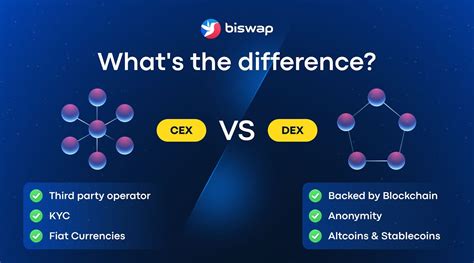
is a traditional online trade platform that facilitates operations by connecting buyers and vendors through a central location. This means that all transactions occur on a single server, reducing the risk of piracy and increasing the speed of execution. On the contrary, Decentralized exchanges (DEX) ** are blockchain -based platforms that use peer technology to facilitate businesses among users.
Dex vs. CEX: Key differences
Let’s examine some key differences between dexs and CEXS:
* Trade platform : DEXS offers a range of negotiation platforms, including limit orders, margin detention and trade falls. On the contrary, the CEX usually only admit the exchanges of points.
* SECURITY : DEX are designed to be safer than CEX because they use cryptography to ensure transactions. Dex also eliminate the risk that the central authorities control the flow of funds.
* User interface : Dex often have an easier use interface, with characteristics such as automatic trade and intelligent contract management.
* Liquidity : Dex generally offer a higher liquidity than CEX, allowing faster operations.
* Rates : Dex generally charge lower rates compared to the CEX.
Dex benefits
Here are some benefits of using a DEX:
- Increased safety : DEX use advanced cryptography and decentralized networks to ensure transactions.
- greater liquidity : Dex often have a greater liquidity, which makes it easier to buy and sell cryptocurrencies quickly.
- Lower rates : Dex generally charge lower rates compared to the CEX.
Disables of Dex
While Dexs offer many advantages, they also come with some inconveniences:
- EMPINADA LEARNING CURVE : DEX require a certain level of technical experience to navigate on the platform and configure exchanges.
- Limited support : Some dexs may not offer both support and CEX for users who need help or have questions.
CEX benefits
Here are some benefits of using an CEX:
- Wide availability : CEX are more widely available than dexs, with thousands of exchanges listed in the main cryptocurrency exchanges.
- Better support : CEX often offer better customer service and services for users who need help.
CEX invacts
While the CEX have their advantages, they also come with some inconveniences:
- Security risks : CEX are more susceptible to piracy and security violations because the central authorities can control the flow of funds.
- higher rates : CEX often charge higher rates compared to DEX.
What is better for trade?
The choice between a DEX and an CEX, ultimately, depends on its personal preferences, commercial needs and risk tolerance. Here is a summary:
*If you are looking for high safety, liquidity and lower rates, A
Dex could be the best option .
*If you need wide availability, better support and you are willing to invest time in learning the platform, a
CEX could be the way to follow .
In conclusion, the DEX offer advanced characteristics, greater security and greater liquidity compared to the CEX. However, they also come with a more pronounced learning curve and a limited support for users who need help.
Recent Comments