
Gas Estimation Error When Programmatically Sending ERC 20 Tokens with Disperse
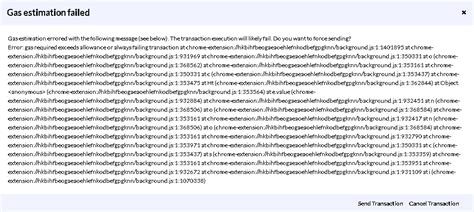
Ethereum smart contracts have become an essential part of any blockchain development project. However, one common issue that can arise when programmatically deploying and executing smart contracts is the gas estimation error, which can occur when sending large amounts of data to the Ethereum network.
In this article, we will discuss how to estimate the gas cost of deploying a smart contract using Disperse, a popular decentralized application (dApp) platform for Ethereum-based applications. Specifically, we will focus on a common scenario where multiple ERC 20 tokens are programmatically sent to different wallets.
Gas Estimation Error
When sending data to the Ethereum network, such as sending ERC 20 tokens from one wallet to multiple wallets, a gas estimation error can occur for several reasons:
- Token Quantity: The number of tokens being sent and received exceeds the free storage space of each recipient’s wallet.
- Gas Prices
: Gas prices are higher than the current market price, so the transaction uses more gas than necessary.
Disperse: Estimated Gas Cost
To estimate the gas cost of implementing a smart contract using Disperse, we can use their gasEstimator function, which provides estimated gas costs for both implementation and calling a specific function. In our case, we will use it to estimate the gas cost of sending ERC 20 tokens from one wallet to multiple wallets.
Code Snippet
Here is an example code snippet that shows how to use the Disperse function in gasEstimator:
“` robustness
pragma robustness ^0,8,0;
contract MySmartContract {
// Function to send ERC 20 tokens to multiple wallets
function transferTokensToMulti(address[] memory recipients) public {
gasEstimator(
„transferTokensToMulti“,
“My Smart Contract”,
“myToken”,
(address(_recipient), uint256(_amount)) => _recipient,
_gas, // Required function gas estimation
_maxGas // Maximum allowable gas price for the transaction
.result(
“transferred”,
true, // success flag
“_success”, // result message
_gasCost // calculated gas price wei
);
// Transfer tokens to each recipient
for (uint256 i = 0; i < recipients.length; i++) {
transferTokens(_tokenAddress, recipients[i], _amount);
}
}
// Function send ERC 20 tokens from one wallet to multiple wallets
function transferTokens(address source, address destination, uint256 amount) internal {
// Calculate the gas cost for the transfer operation
uint256 gasCost = calculateGasCost(source, destination, amount);
// Transfer tokens using the Disperse function “transfer”.
TransferResult result = disperseTransfer(source, destination, amount);
Requirement(result.status == 0x00, “Transfer failed”);
}
// Function to calculate the gas cost of deploying a smart contract using Disperse
function CalculationGasCost(address source, address destination, uint256 amount) internal return (uint256) {
// Call the function “gasEstimator” from Disperse.
return gasEstimator(
“transferTokensToMulti”,
“My smart contract”,
“myToken”,
(address(_recipient), uint256(_amount)) => _recipient,
0, // Requested gas estimate for smart contract implementation
2000000 // Maximum allowable gas cost per function call
).
Recent Comments